


Establishment of China’s First “Rainforest Restoration Student Club”
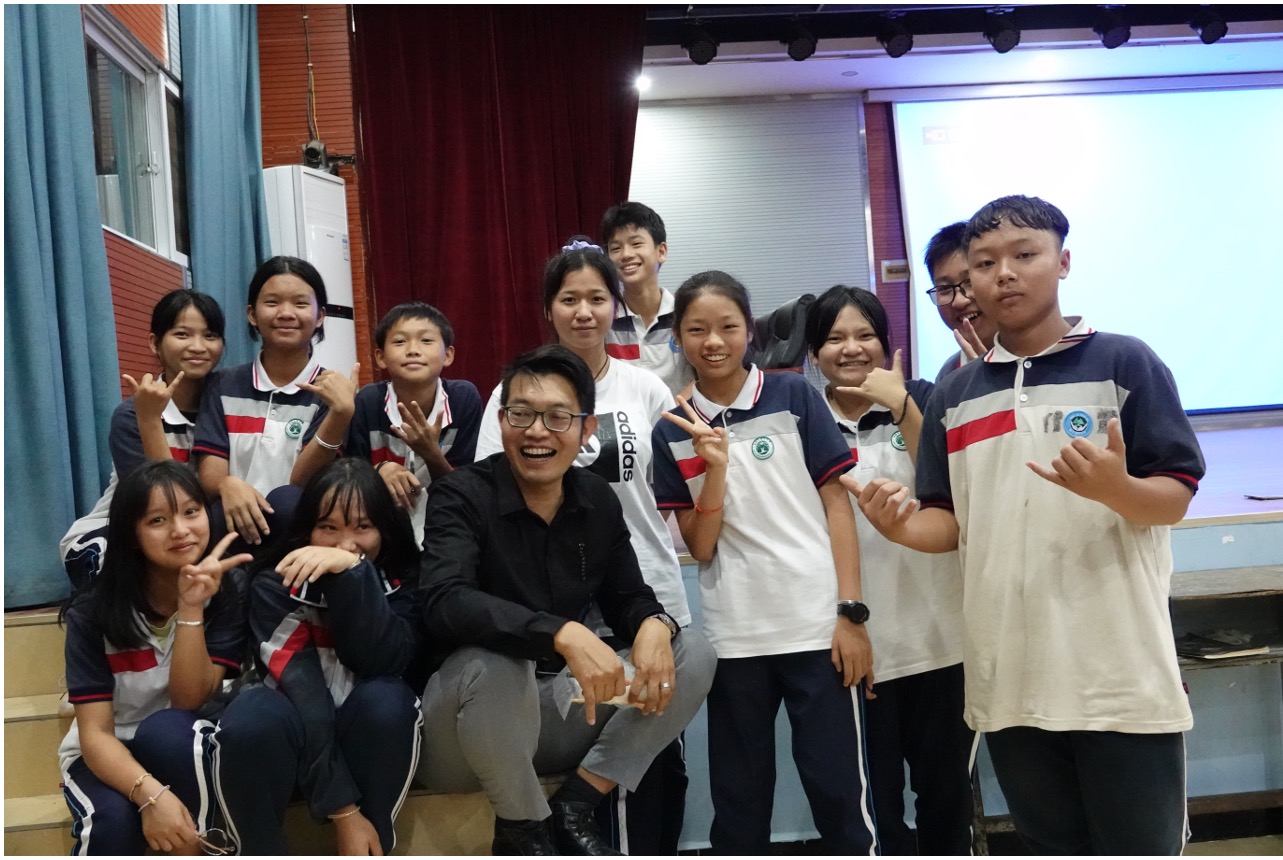
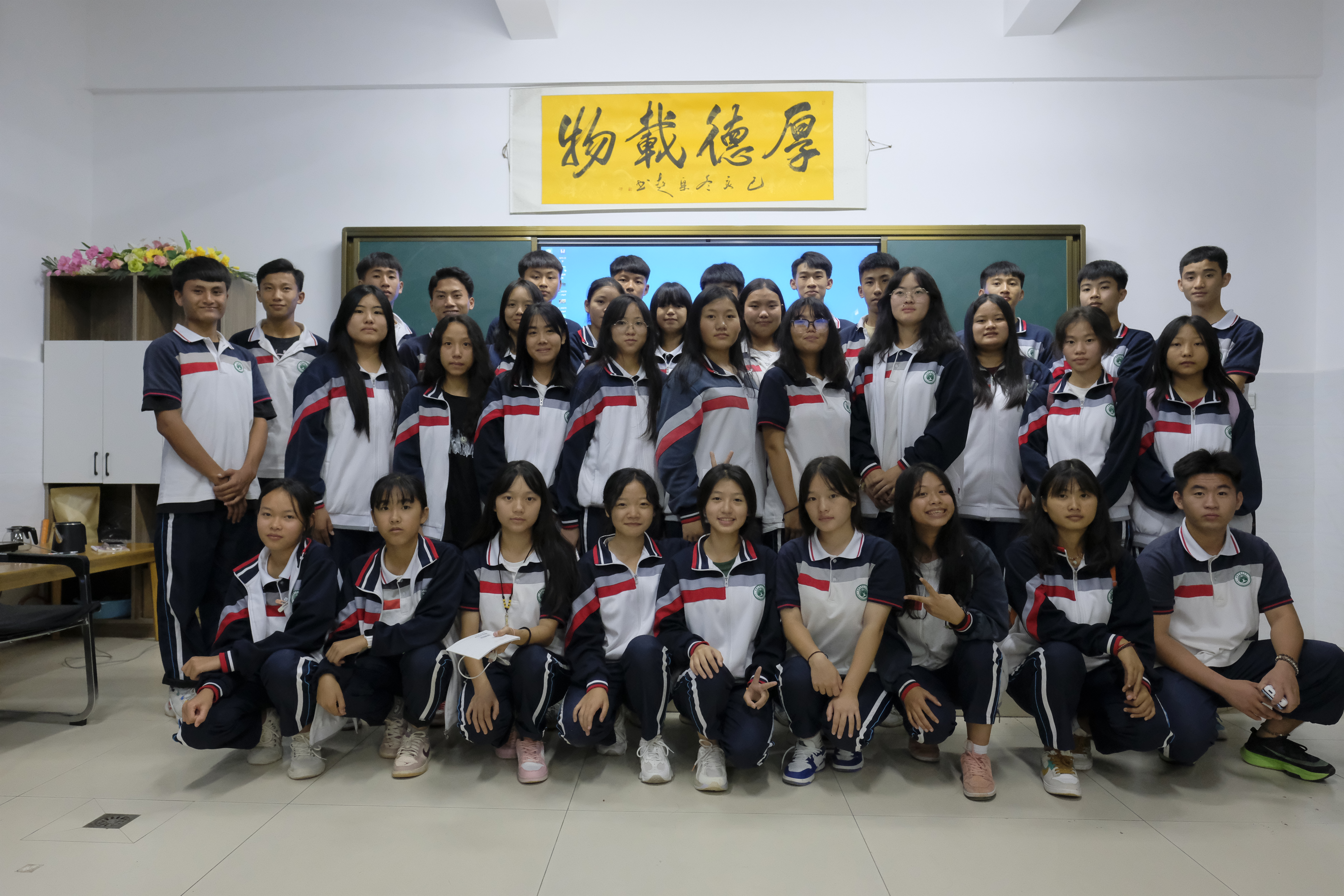
In 2022, under the guidance of scientists from the Environmental Education Center of at the Xishuangbanna Tropical Botanical Garden, Chinese Academy of Sciences, Good to Nature led the creation of China’s first student club focused on rainforest restoration at Menglun Middle School, Yunnan. Strongly supported by the Mengla County Education and Sports Bureau and school principals, the club leverages a 20-mu (approximately 1.3-hectare)rainforest restoration pilot site adjacent to the campus, pioneering a new model that integrates education with ecological restoration.
The club aims to enhance students’ understanding of the interdependence between rainforest flora and fauna while cultivating a sense of local ecological connection. Through a diverse learning model that combines science lectures, field practices, scientist dialogues, and project-based learning, students are guided from scientific inquiry toward real ecological action. They not only learn about the principles of rainforest restoration and biodiversity conservation, but also take part firsthand in tree planting, biodiversity monitoring, and other scientific experiments. By engaging directly in these activities, the younger generation learns to interpret the stories of the rainforest through experience and becomes advocates for ecological protection.
This innovative practice has built a bridge for youth participation in biodiversity conservation, injecting fresh energy and vitality into the sustainable development of tropical rainforests.
Members of the Rainforest Restoration Club take on the “Global Fake Caterpillar Experiment” featured in 【Science】
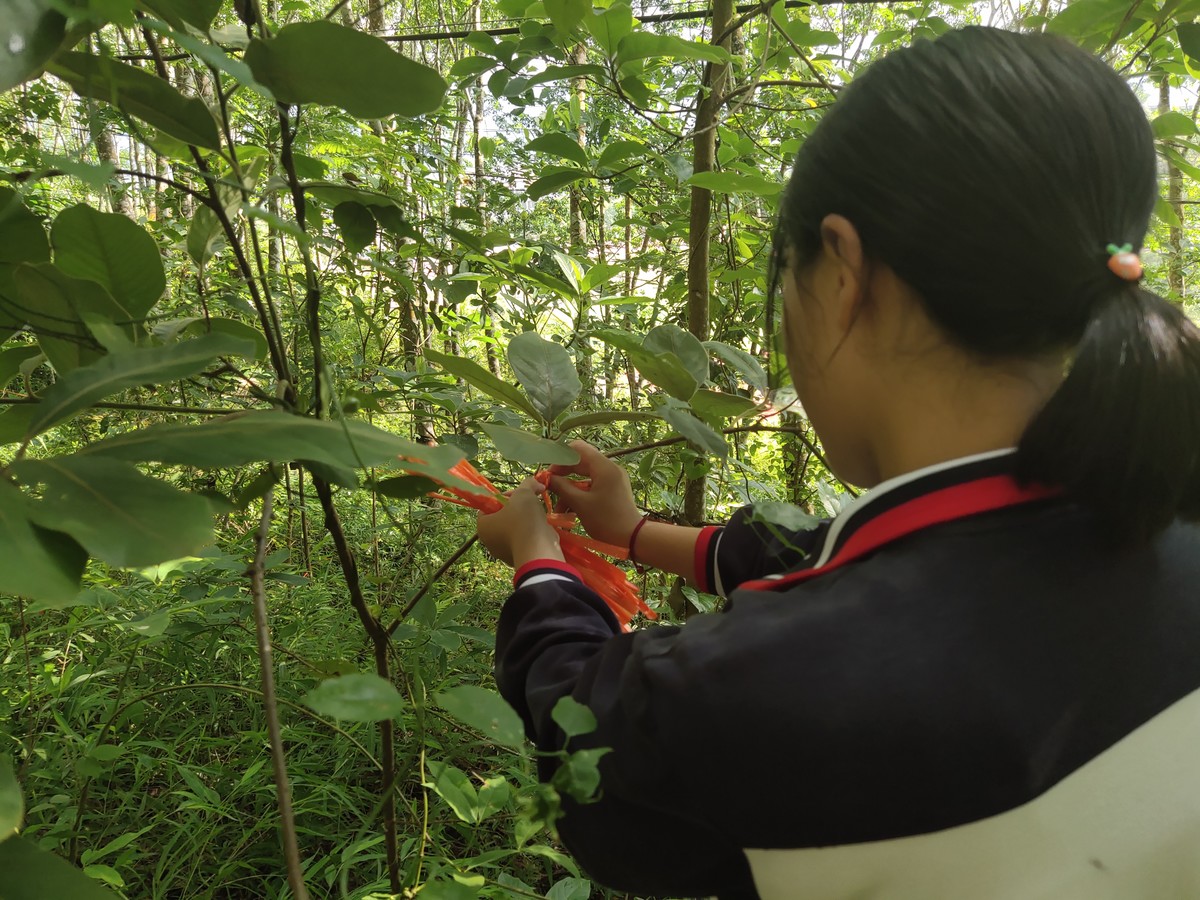
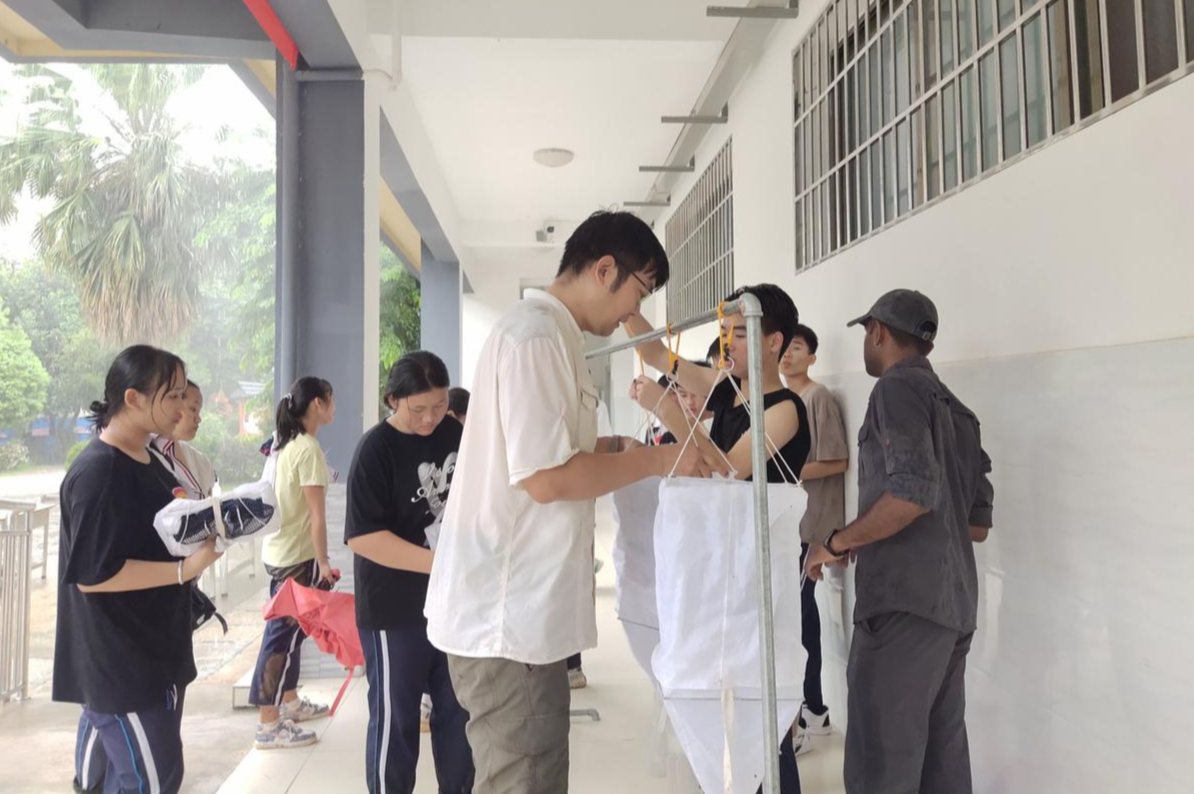
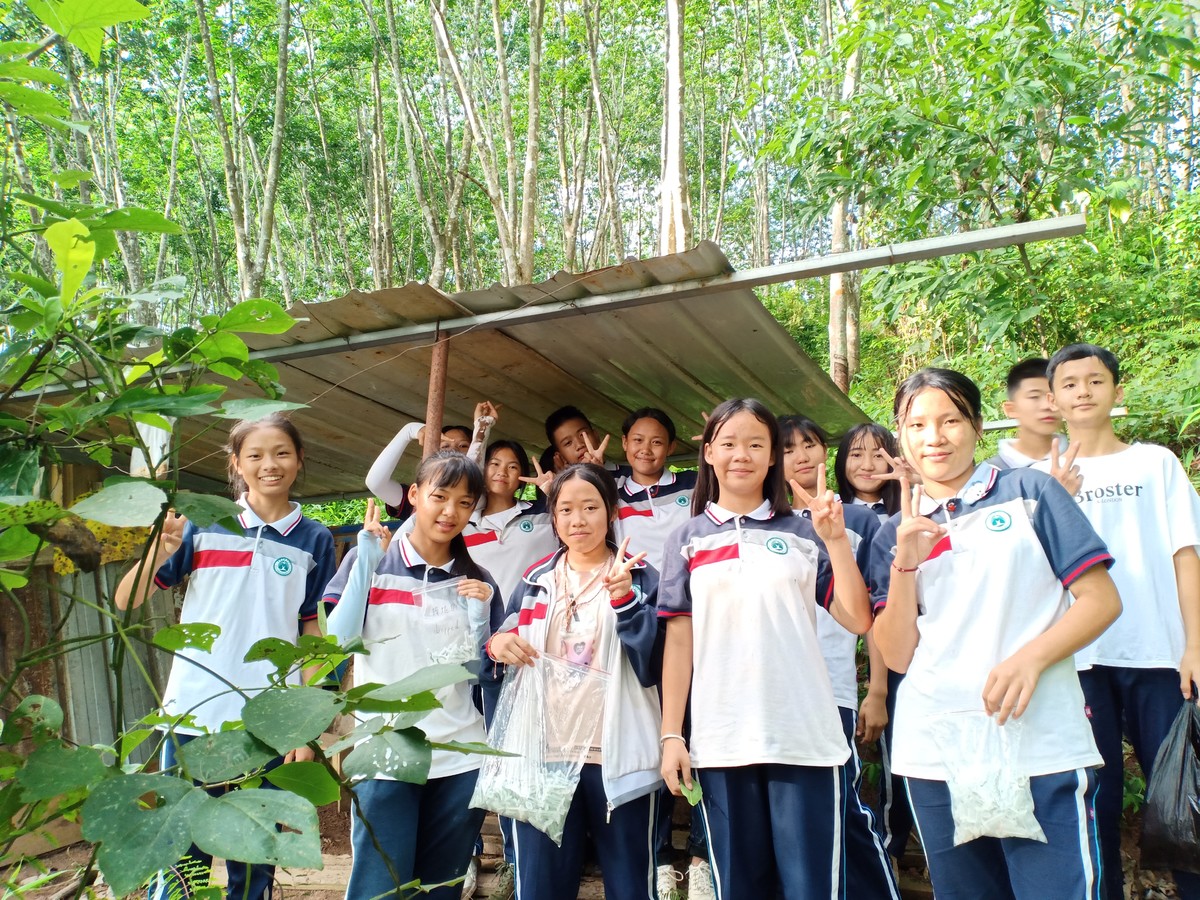
In May 2022, scientists from the Xishuangbanna Tropical Botanical Garden of the Chinese Academy of Sciences brought an engaging field ecology class to Menglun Middle School. Under expert guidance, members of the 2021 Rainforest Restoration Club personally recreated the “Global Fake Caterpillar Experiment” published in the prestigious journal 【Science】, gaining hands-on experience in scientific research while monitoring the ecological restoration of the rainforest.

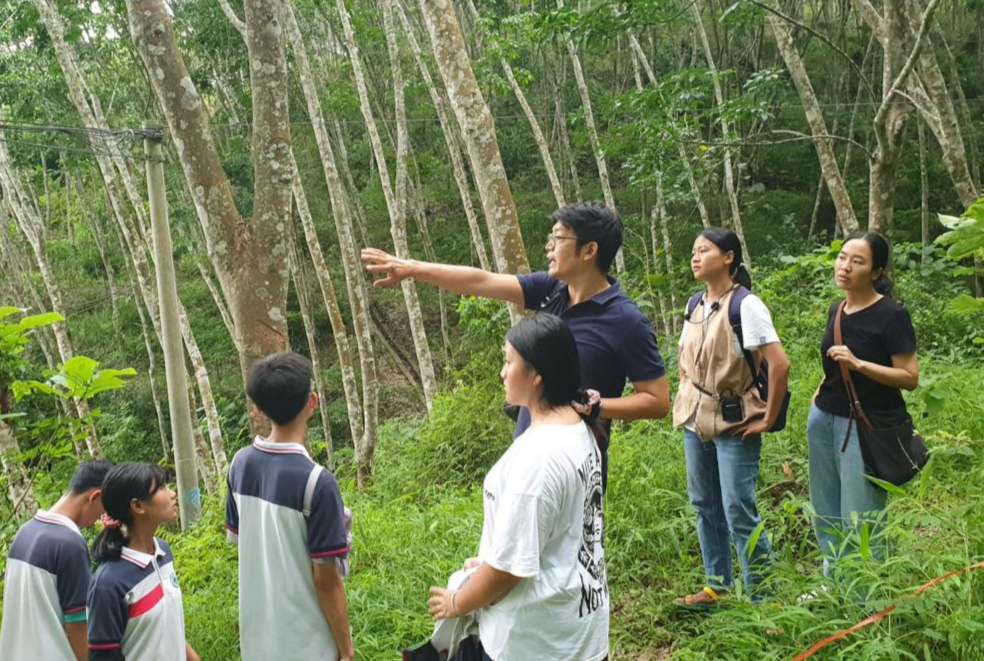

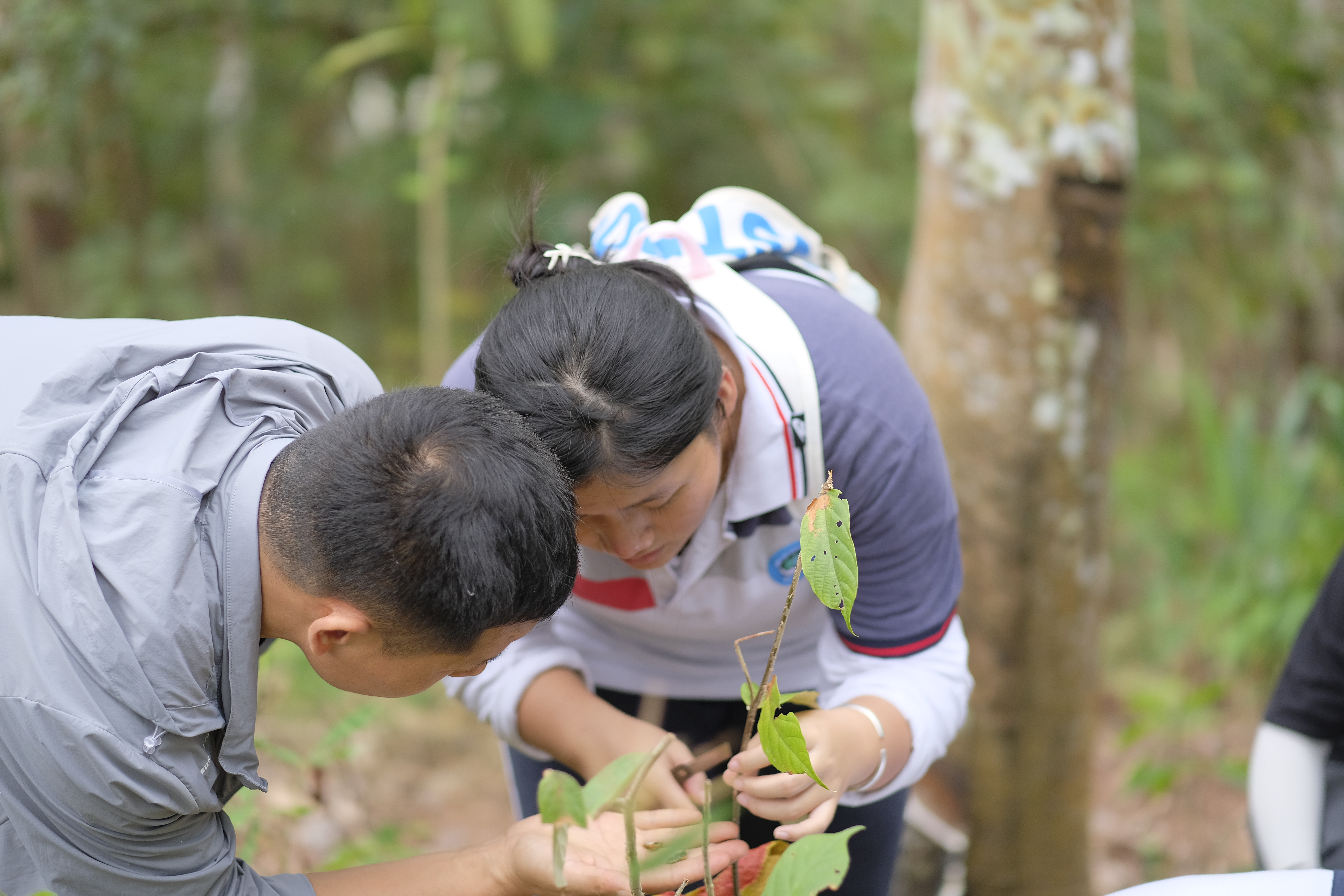
During the activity, the club members crafted fake caterpillars from clay and carefully placed them in different areas of the restored rubber plantation plots. By examining bite marks on the retrieved models, they learned to identify different types of predators, including such as birds and insects. In addition, the members collected soil-dwelling organisms from the forest floor and observed them under microscopes, closely studying and distinguishing various tiny insect species.
This unique hands-on experience was not just a lesson in scientific methods but a genuine ecological monitoring project. Through multiple rounds of sampling and data comparison over time, the students will analyze how insect diversity changes as the degraded rubber plantation gradually recovers into a tropical rainforest. The activity planted the seed of ecological awareness in the hearts of young participants, empowering them to become firsthand witnesses and recorders of the environmental changes unfolding in their own hometown.
From Classroom to Rainforest: CAS Experts Lead Middle School Students on an Ecological Restoration Journey
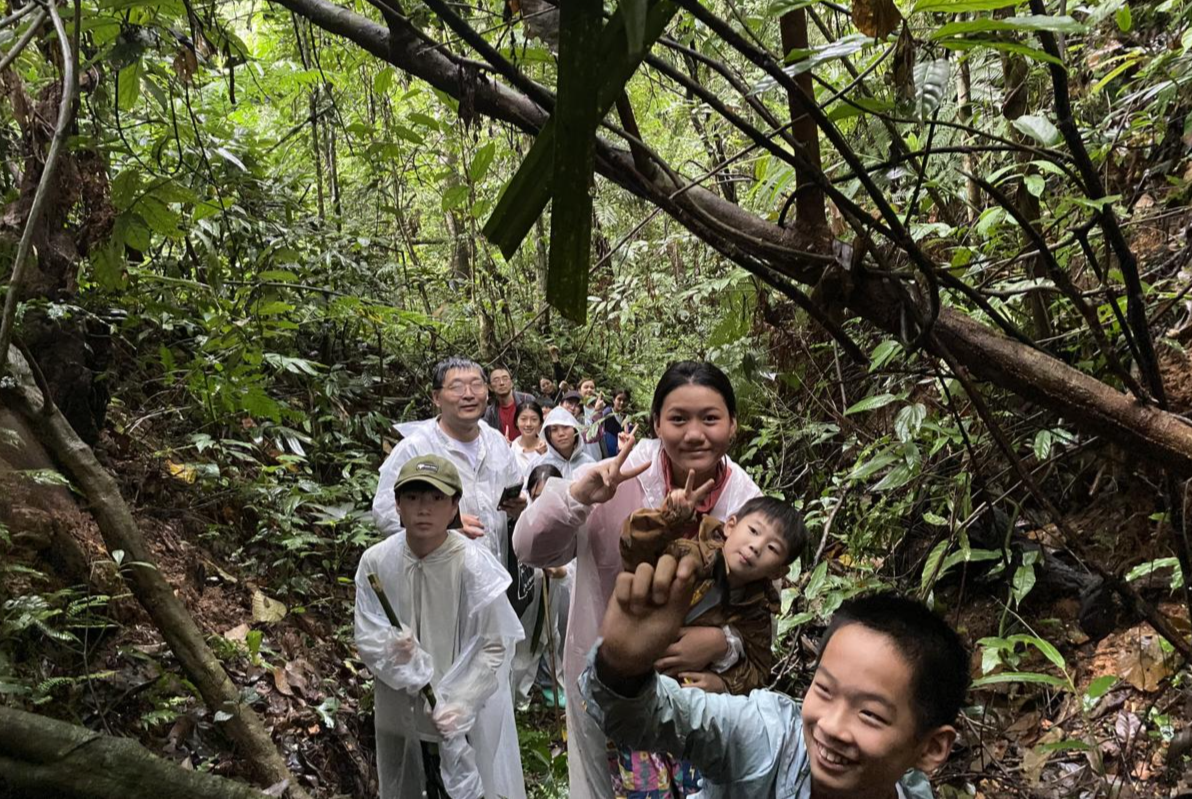
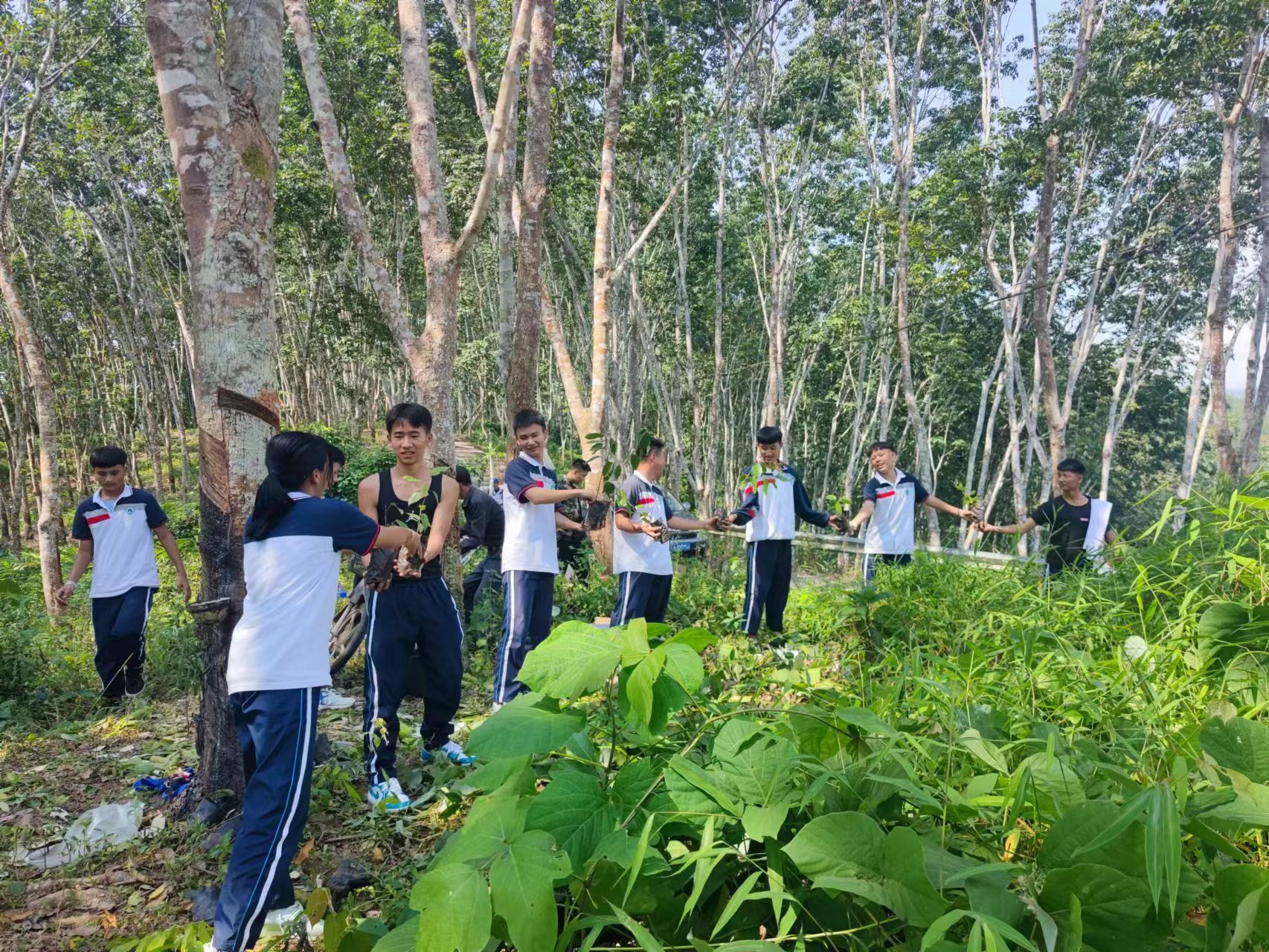
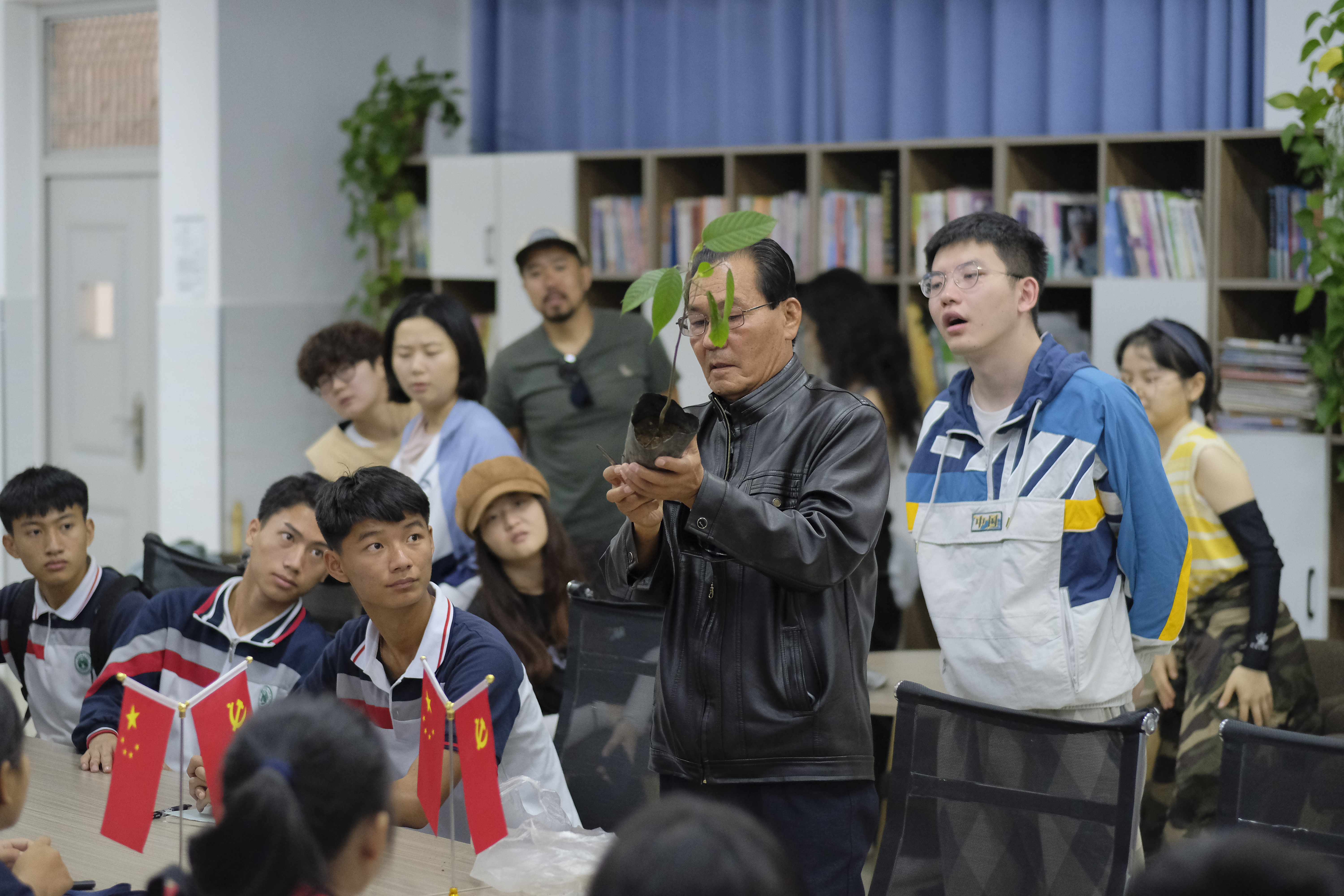
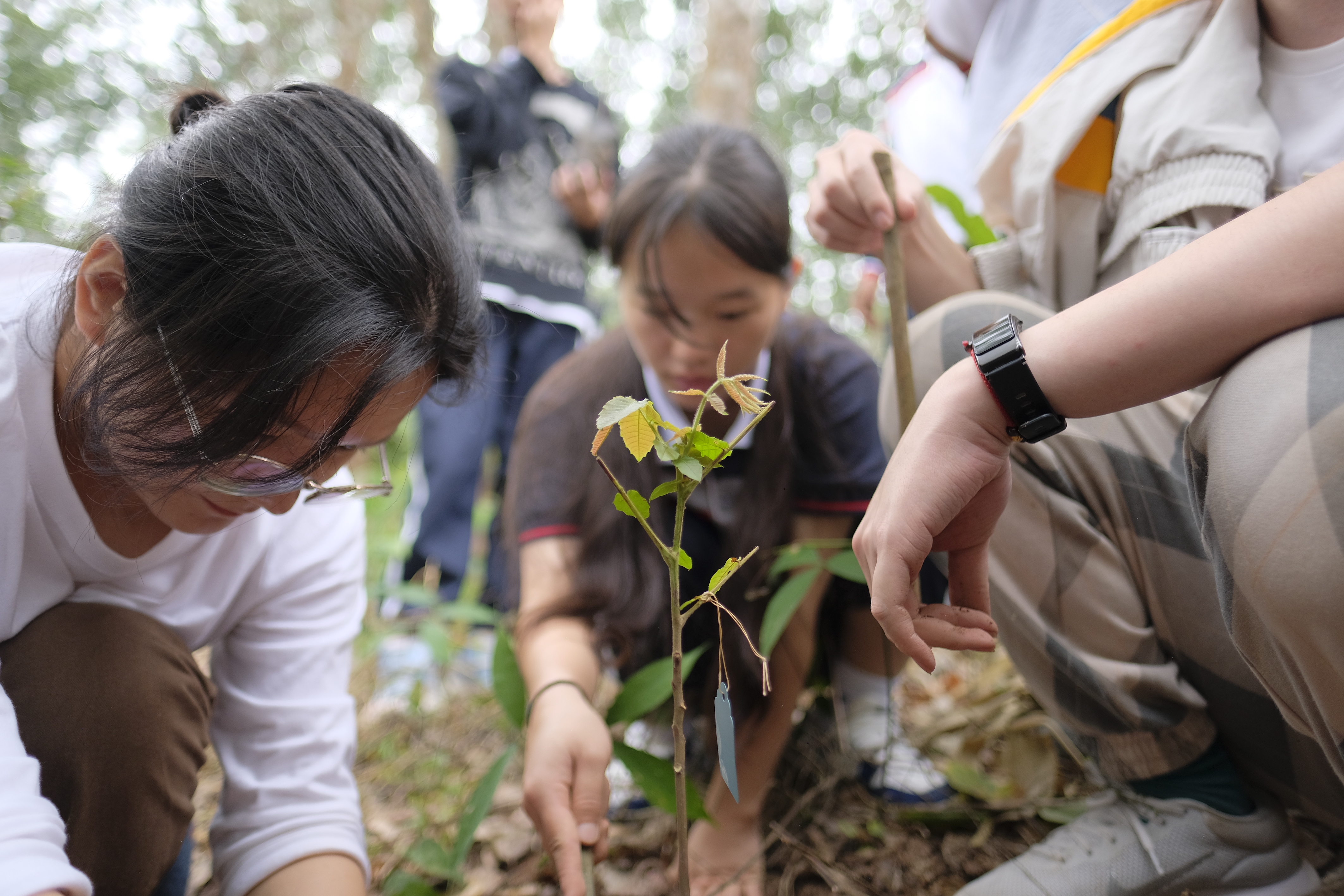
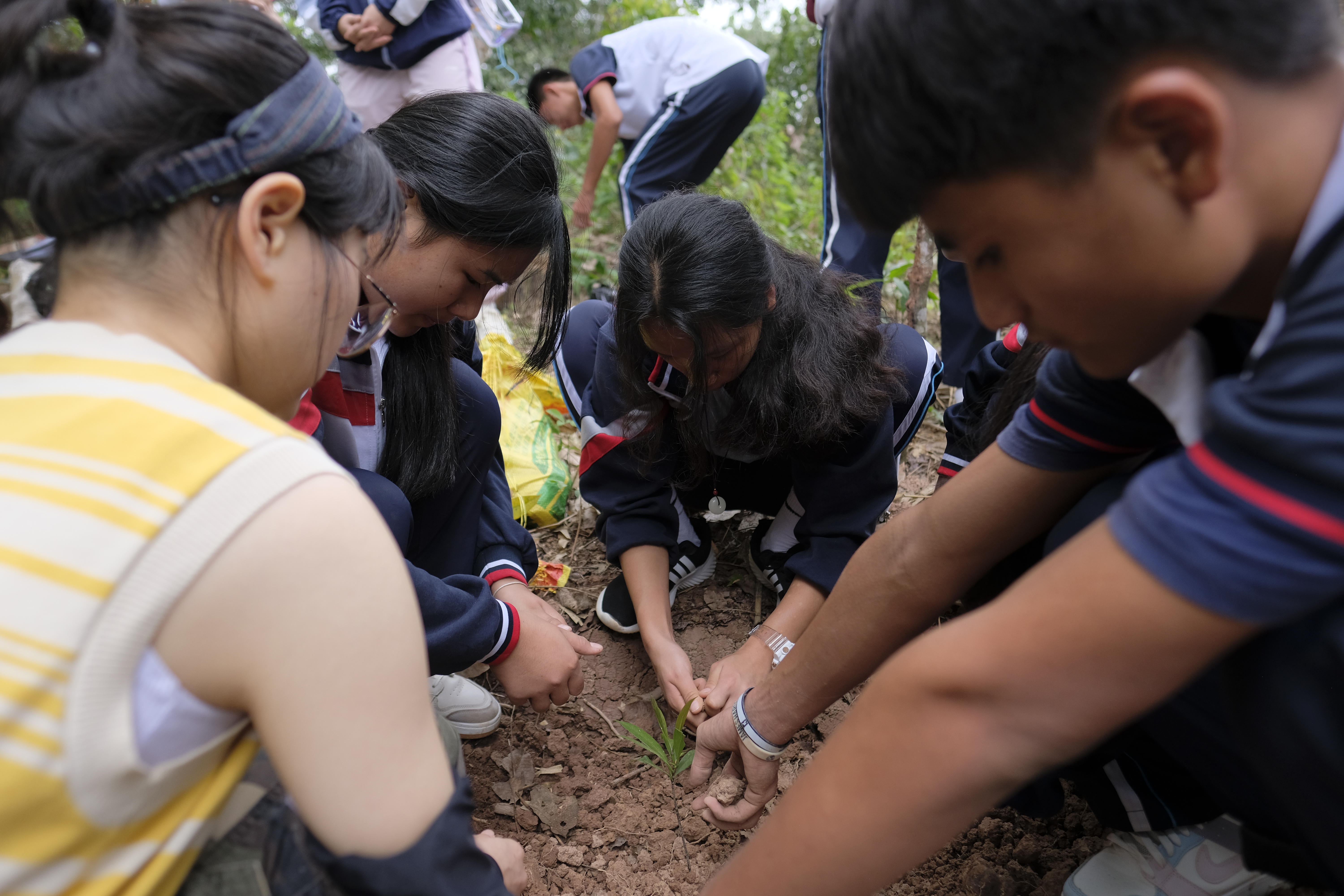
On November 21, 2022, under the guidance of Dr. Song Liang, Head of the Ecological Restoration Research Group at the Xishuangbanna Tropical Botanical Garden (XTBG), Chinese Academy of Sciences, and tree-planting expert Li Yanchang, members of the Rainforest Restoration Club stepped out of the classroom and into the nearby rubber forest restoration site for a hands-on tree transplanting activity. The students systematically learned about key steps and principles such as digging specifications, soil disinfection, seedling acclimation, and transplanting techniques. They then personally planted rare native species such as Parashorea chinensis and Menglun Terminalia, tagging each seedling with their names. Each young tree symbolized their first hopeful step in contributing to the restoration of the tropical rainforest.
This activity, which seamlessly combined theory and hands-on practice, transformed the concept of “rainforest restoration” from textbook knowledge into a tangible, living experience. It greatly inspired the students’ enthusiasm for understanding their local ecology and strengthened their sense of responsibility and commitment toward environmental protection.


 沪公网安备31010402009361号